Watercolor Sleeping Dogs Nursery Clipart: A Designer's Guide
There's a particular kind of warmth that a hand-painted element brings to a digital project. It feels personal, crafted, and full of character. This is precisely the charm of the Watercolor Sleeping Dogs Nursery Clipart collection. It's not just a set of images; it's a toolkit for infusing projects with a gentle, whimsical, and deeply comforting aesthetic. Think of it as your go-to design asset for creating work that feels both professional and heartfelt.
More Than Just Cute Puppies: The Visual Appeal
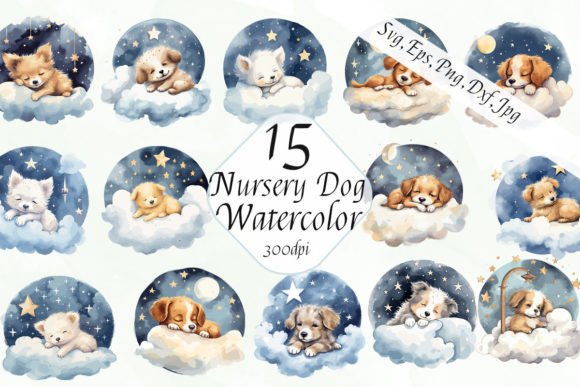
Let's be clear: this isn't generic clipart. The style here is distinctly watercolor, which means you get soft, blended washes of color, subtle texture, and an organic feel that's hard to replicate digitally. The subject matter—sleeping dogs—is universally appealing and carries a built-in sense of peace, innocence, and comfort. Each of the 15 illustrations captures a different pose or breed, offering variety while maintaining a cohesive visual style. The personalities range from a snoozing bulldog to a curled-up poodle, all rendered with a delicate touch that avoids looking overly cartoonish. This balance makes the collection versatile; it's perfect for a baby's nursery but sophisticated enough for a boutique pet brand or a cozy café's branding.
The included file formats—PNG, SVG, JPEG, EPS, and DXF—are a practical consideration that speaks to real-world use. The transparent PNGs are a lifesaver for layering in design software, while the vector formats (SVG, EPS) ensure you can scale these illustrations to any size without losing quality. Whether you're designing a tiny sticker or a large wall mural, the 300 DPI resolution guarantees crispness. This isn't just a collection of pretty pictures; it's a professional-grade set of design assets.
Where This Clipart Truly Shines: Practical Applications
The real value of a resource like this is in its application. As a designer or creator, you're constantly looking for elements that solve multiple problems. Here’s where the Watercolor Sleeping Dogs Nursery Clipart earns its place in your toolkit.
For Branding and Marketing: Imagine a pet grooming service, a dog bakery, or a veterinary clinic wanting to soften its image. Using one of these sleeping dog illustrations as a secondary brand element or in social media graphics instantly communicates care, gentleness, and trust. It’s a subtle way to build an emotional connection with your audience. Pair it with a clean sans serif font for the main copy and a friendly script font for accents, and you have a complete, approachable brand identity.
For Product Design and E-commerce: This is where the clipart becomes a direct revenue driver. The collection is explicitly designed for printing on physical goods. Think beyond the obvious nursery wall art. Consider:
- Apparel: A single, well-placed sleeping dog on a t-shirt or onesie. The watercolor style gives it a trendy, artistic feel that stands out from solid-color prints.
- Paper Goods: Greeting cards, invitations, gift tags, and notebook covers. The soft aesthetic is ideal for stationery.
- Home Décor: Throw pillows, mugs, and coasters. The calming imagery fits perfectly in living spaces.
- Digital Products: Sell printable art, planner stickers, or digital scrapbooking kits on platforms like Etsy. The commercial license makes this straightforward.
For Editorial and Web Design: Bloggers and content creators in the parenting, pet, or lifestyle niches can use these illustrations to break up text, add visual interest to headers, or create a consistent theme across their website and social media. They work beautifully as background elements or featured graphics, adding personality without overwhelming the content. In web design, they can soften the edges of a tech-focused site or complete the cozy vibe of a handmade goods store.
Making It Work: Selection and Pairing Strategies
Having a great asset is one thing; using it effectively is another. Here’s some practical guidance for integrating this clipart into your projects.
Evaluate the Context: Always consider your project's tone. The sleeping dog illustrations are inherently gentle and serene. They are a perfect fit for projects centered on comfort, care, nostalgia, and softness. They might be less suitable for high-energy, fast-paced, or corporate themes unless used with extreme subtlety as a contrasting element.
Master the Art of Font Pairing: The typography you choose will make or break the design. Since the clipart has a soft, organic feel, pairing it with a stark, geometric sans serif can create an appealing modern contrast. For a fully harmonious look, pair it with a rounded sans serif or a casual handwritten font. Avoid overly ornate or aggressive display fonts that would clash with the watercolor's subtlety. A good font pairing involves balancing personality and readability—the clipart provides the personality, so your type choices should ensure clarity.
Test for Readability and Hierarchy: If you're using a dog illustration as a background element for text (like on a website banner or a flyer), ensure there is enough contrast. You might need to place a semi-transparent overlay or a solid shape behind your text to maintain legibility. Use the clipart to guide the viewer's eye; a sleeping dog naturally draws attention, so position it to lead into your key message or call to action.
Understand the Licensing: The collection includes a commercial license, which is crucial. This means you can use the designs in projects you sell—like the products listed above—without legal headaches. However, always double-check the specific terms. Can you use it in unlimited commercial projects? Are there any restrictions on print-on-demand services? Knowing this upfront protects your business and lets you use the assets with confidence.
Ultimately, the Watercolor Sleeping Dogs Nursery Clipart is more than a decorative set. It's a versatile creative font of imagery—a collection that provides a consistent, high-quality aesthetic to elevate everything from a small craft project to a full-scale brand launch. Its strength lies in its ability to evoke emotion and connect with people on a human level, which is, after all, the goal of all good design.